Sunday, June 23, 2013

No. 141: Innovative approaches to power saving emerge one after another (June 24, 2013)

Technology:
Venture companies specializing in power saving are advancing their competitive edge. Sassor will start to provide retail and restaurant chains with consulting on power saving. They put a special device on the distribution switchboard and measure the operational status of air-conditioners and dishwaters. They analyze collected data on power consumption and use frequency, and display their suggestions automatically on the tablets installed on each outlet. Comparing the operational status of equipment between outlets will help the chain to work out effective measures for power saving. They also plan to draw typical patterns of wasteful spending and submit them to the chain for more effective measures.

PICO ADA provides hospital and hotels with an optimization control service of electricity, gas, and water supply. In these facilities, power is needed to circulate water for kitchens and bathrooms. They save water to reduce power consumption of pumps and adjust the volume of air-conditioners. They forecast hourly change of weather by simulating data from the Meteorological Agency using their self-developed software. Their approach can reduce energy and water supply charges by 15%. A hospital with 300 beds supposedly can reduce expenditure by 10 million yen per year. They offer the equipment and operation support for 4,200,000 yen per year. They collect and analyze data from 1,500 facilities across the country to improve the control program constantly for higher accuracy. 

   A campaign girl distributes uchiwa (paper fan) to pedestrians 
on the street as the easiest and cheapest way of energy saving.

Tuesday, June 4, 2013

No. 140: Japanese environmental technology is increasing its presence in Asia and Africa (June 4, 2013)

Business trend:
The Japanese government will reach an agreement with Ethiopia shortly to get an emission quota of carbon dioxide from Ethiopia in exchange for providing it with state-of-the-art environmental technology. The first technology to be transferred to Ethiopia will be the geothermal generation technology. In East Africa, geothermal generation is promising because a great rift zone made up of volcanoes exists. Ethiopia is in urgent need of power source other than hydraulic power generation to cope with rapid growth of economy and population. The Ministry of Economy, Trade and Industry has been assisting Japanese companies in their survey on geothermal generation in this area. The Japanese government is also expected to reach an agreement with Indonesia on Japan’s support for infrastructure improvement. The Ministry of Environment will help Indonesia build waste disposal plants and improve the waster supply and sewerage systems in such large cities as Surabaya.

Major countries with which Japan is negotiating on the bilateral quota system

Status
Country
Environmental technology to be transferred
Agreement has already been concluded
Mongolia
Bangladesh
Highly-efficient thermal power generation
Agreement will likely be concluded shortly
Ethiopia
Indonesia
Geothermal generation
Negotiations are in progress
Vietnam, India, Thailand, Laos, and Cambodia
Biomass generation, off-shore wind generation, energy-saving technology, water supply and sewerage systems, waste treatment
Negotiations are in progress
Kenya
Photovoltaic generation, geothermal generation

Japan proposed the bilateral credit system that allows providing environmental technology to set off emissions of greenhouse gases as a system after 2020 when the Kyoto Protocol ends. The Ministry of Economy, Trade and Industry has been assisting Japanese companies in their survey on geothermal generation in this area. Japan proposed the bilateral credit system that allows providing environmental technology to set off emissions of greenhouse gases as a system after 2020 when the Kyoto Protocol ends. Japan has already agreed with Mongolia and Bangladesh on the bilateral quota system. Thanks to the strenuous efforts of Japanese government officials, Japanese environmental technology is increasing its presence in Asia and Africa steadily. 

Potential of geothermal generation
 

Sunday, March 3, 2013

No. 139: A demonstrative driving experiment of small EV trucks starts in Tokyo (March 4, 2013)

Technology: 
Yamato Transport that is the leader of Japan’s home delivery business, Toyota, and Hino will start a demonstrative driving experiment of small EV trucks by the end of this month. The small EV trucks used in the experiment carry a load of one ton and travel about 20-30 km per day. They carry a refrigerated compartment and a chillroom for the refrigerated courier service. The research team will study advantages including reducing environmental load to be realized by the switchover of the fuel from light oil to electricity and the performance of batteries.

The small EV truck travels about 100 km per charge. The motor is housed below the driver’s seat, and the height of load-carrying platform is about 44 cm, about half of the height of the current load-carrying platform, to increase the efficiency of loading and unloading of the cargo. The two experimental small EV trucks will be in service in Tokyo until February 2014.
    
 
The experimental small EV trucks will
 travel inside Tokyo until February 2014
 

Wednesday, January 2, 2013

No. 138: Nittsu’s Grass-roots activities to reduce carbon dioxide emissions in Asia (January 2, 2013)

Business trend:
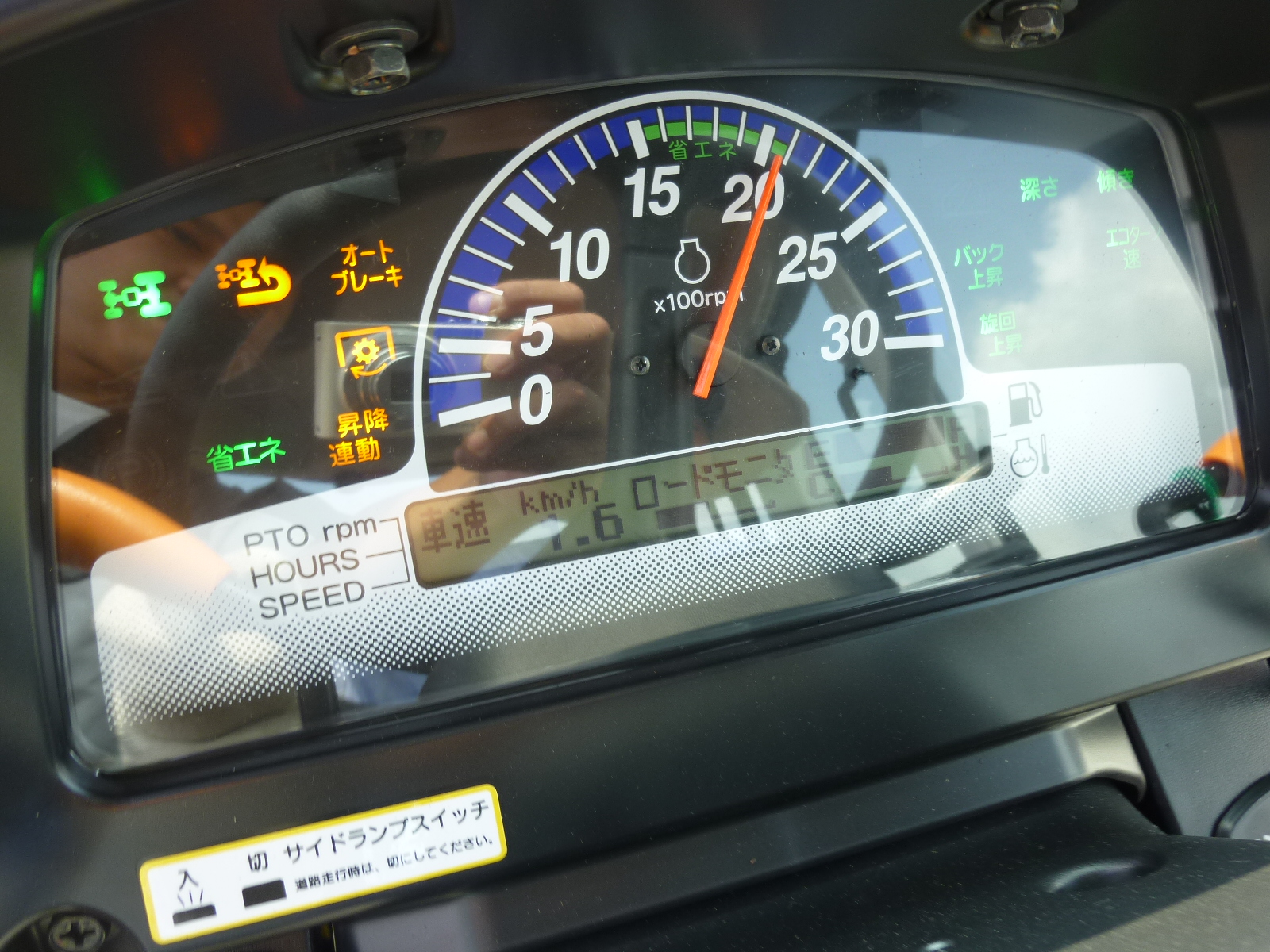
Beginning in 2013, Nippon Express (Nittsu) that is Japan’s largest transportation company will give guidance to truck drivers about energy-saving driving in Vietnam to reduce CO2 emissions by 7%. The company plans to expand the grass-roots activities to Indonesia and Thailand and ultimately wishes to apply the energy-saving driving to hundreds of thousands of trucks it operates worldwide. It will use the reduced amount as its emission allowances. It reckons that it will be able to reduce about 950,000 tons of CO2 that it emitted in Japan in 2011 to nearly zero should it introduce the energy saving driving to 200,000 trucks.

The guidance about energy saving driving is under way in Malaysia. Based on the results in Malaysia, the company reckons that it will be possible to reduce 5 tons of CO2 emissions per truck per year in Vietnam if the energy-saving driving technique becomes widespread. Vietnamese drivers will be instructed to stop idling while waiting for the green signal. In addition, trucks will be loaded with the latest driving control system that tells where the driver made a hard stop and sudden acceleration besides showing fuel consumption of each driver.  

The green letters show that the driver is 
traveling in the energy-saving mode. 

Tuesday, January 1, 2013

No. 137: A technology to recycle liquid crystal display TVs completely (January 1, 2013)

Technology:
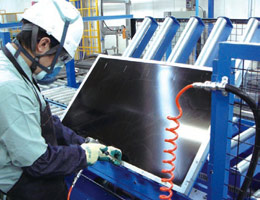
Sharp developed a technology to recycle used liquid crystal display (LCD) TVs completely in alliance with Osaka Prefecture University. They successfully created zeolite by reacting pulverized glass in the alkaline solution. Zeolite is expected to enjoy stable demand because it can be used as a soil improvement agent. 

Glass of LCD panel is hard to recycle because it has a protective film on it, and LCD TV makers provide it to recycling manufacturers as a cement material for virtually free. The LCD TV is subject to Home Appliance Recycling Law, and consumes share the cost for recycling. They pay about 2,800 yen for each larger-than-16 inch LCD TV. It is estimated that 600,000 LCD TVs were discarded in 2011. The number of discarded LCD TVs is estimated to increase to 2,600,000 units in 2015 and 5,000,000 units in 2020. Sharp plans to put the technology into practical use in 2015 and provide it to other home electronics companies. 

Recyling LCD TVs
Sharp developed a technology for 
complete recycling of LCD TVs  

Thursday, November 1, 2012

No. 136: BEMS is spreading among medium-sized companies (November 1, 2012)

Business trend:
The building energy management system (BEMS) is spreading among medium-sized companies. Orix, that is a multi business company, started to introduce a BEMS into a medium-sized company without an initial cost. Orix installs a power monitoring system in buildings, shops, and facilities at its own expense, and pays monthly communication cost. Orix collects investment from part of the value that a building saved. It pays up to 80% of the saved value to the client as a reward. In the case of a facility that uses 16 million yen for electricity annually, saved value is 3,200,000 yen if electricity is saved 20%. In this case, Orix collects 640,000 yen, while the remaining 2,560,000 yen is the cost that the client reduced with the help of the BEMS. Because it takes long to collect all the introduction cost, the client cannot cancel the contract for five years in principle.

IBM Japan will launch a service to reduce power consumption of buildings jointly with AEON that is one of Japan’s leading supermarket chains. In the initial stage, the two companies plan to install the system in AEON’s 180 outlets across the country. Toshiba will market a system that monitors power consumption for 24 hours utilizing the elevator monitoring system it has accumulated. Toshiba’s system starts at one million yen. Hitachi will also market a small BEMS to small facilities. Tokyo Gas works with its groups companies to control power consumption at a peak period and offers six different kinds of BEMS products and services.

  
Building Energy Management System (BEMS)

Monday, October 29, 2012

No. 135: Utilizing electricity generating microorganisms to the treatment of plant effluent (October 29, 2012)

Technology:
Tokyo University started the research to develop a system that utilizes electricity generating microorganisms for the treatment of effluent from plants in alliance with Tokyo University of Pharmacy and Life Sciences, Panasonic, and Sekisui Chemical. The system will generate power necessary to run the facility while treating organic substances in the effluent. It is expected to reduce the power consumption by up to 80%. They are scheduled to start the substantiative experiment in 2014 and put the system into practical use in 7-8 years.

Several microorganisms that emit electrons stored inside exist in the natural world. Kazuhito Hashimoto of Tokyo University and Kazuya Watanabe of Tokyo University of Pharmacy and Life Sciences built a fuel cell using several electricity generating microorganisms. They applied microorganisms to the metal surface of the negative electrode and immersed it in the effluent to generate electrons. In the experiment, they used one liter of effluent and eliminated 80% of organic substances in six hours, and generated electricity of 80-500 milliwatts. The research team plans to develop a system that can treat one ton of effluent in 24 hours by enlarging the size of a cell and improving the generation efficiency through modified combination of microorganisms and upgraded electrode.

The new system does not need equipment to mix effluent because the microorganisms used in the system can live without oxygen. At the same time, the new system creates about one third of the existing effluent treatment facility because the propagation of microorganisms is rather small. The same kind of research is under way in the U.S. Australia, Great Britain, and Korea. Kazuhito Hashimoto of Tokyo University predicts that an independent effluent treatment system without energy supply may be viable. The new system will solve the energy-saving problems that advanced countries have in common and create a big market in developing countries in need of improving electricity infrastructure.


The new system for the treatment of plant effluent utilizing electricity generating microorganisms. It does not need equipment to mix effluent because the microorganisms used in the system can live without oxygen.