Sunday, March 3, 2013

No. 139: A demonstrative driving experiment of small EV trucks starts in Tokyo (March 4, 2013)

Technology: 
Yamato Transport that is the leader of Japan’s home delivery business, Toyota, and Hino will start a demonstrative driving experiment of small EV trucks by the end of this month. The small EV trucks used in the experiment carry a load of one ton and travel about 20-30 km per day. They carry a refrigerated compartment and a chillroom for the refrigerated courier service. The research team will study advantages including reducing environmental load to be realized by the switchover of the fuel from light oil to electricity and the performance of batteries.

The small EV truck travels about 100 km per charge. The motor is housed below the driver’s seat, and the height of load-carrying platform is about 44 cm, about half of the height of the current load-carrying platform, to increase the efficiency of loading and unloading of the cargo. The two experimental small EV trucks will be in service in Tokyo until February 2014.
    
 
The experimental small EV trucks will
 travel inside Tokyo until February 2014
 

Wednesday, January 2, 2013

No. 138: Nittsu’s Grass-roots activities to reduce carbon dioxide emissions in Asia (January 2, 2013)

Business trend:
Beginning in 2013, Nippon Express (Nittsu) that is Japan’s largest transportation company will give guidance to truck drivers about energy-saving driving in Vietnam to reduce CO2 emissions by 7%. The company plans to expand the grass-roots activities to Indonesia and Thailand and ultimately wishes to apply the energy-saving driving to hundreds of thousands of trucks it operates worldwide. It will use the reduced amount as its emission allowances. It reckons that it will be able to reduce about 950,000 tons of CO2 that it emitted in Japan in 2011 to nearly zero should it introduce the energy saving driving to 200,000 trucks.

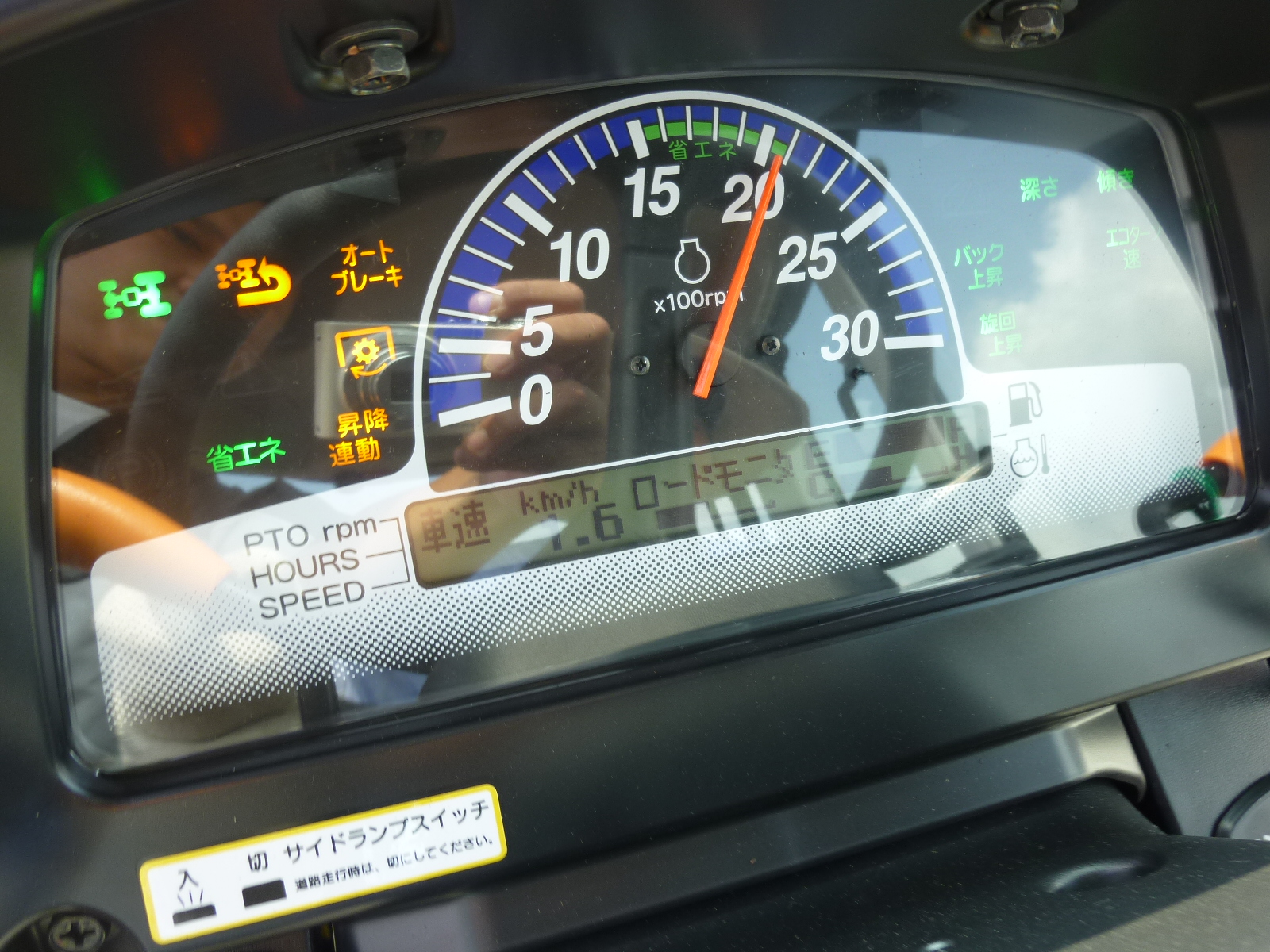
The guidance about energy saving driving is under way in Malaysia. Based on the results in Malaysia, the company reckons that it will be possible to reduce 5 tons of CO2 emissions per truck per year in Vietnam if the energy-saving driving technique becomes widespread. Vietnamese drivers will be instructed to stop idling while waiting for the green signal. In addition, trucks will be loaded with the latest driving control system that tells where the driver made a hard stop and sudden acceleration besides showing fuel consumption of each driver.  

The green letters show that the driver is 
traveling in the energy-saving mode. 

Tuesday, January 1, 2013

No. 137: A technology to recycle liquid crystal display TVs completely (January 1, 2013)

Technology:
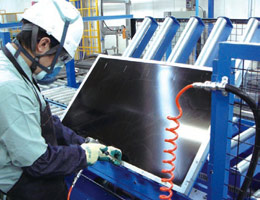
Sharp developed a technology to recycle used liquid crystal display (LCD) TVs completely in alliance with Osaka Prefecture University. They successfully created zeolite by reacting pulverized glass in the alkaline solution. Zeolite is expected to enjoy stable demand because it can be used as a soil improvement agent. 

Glass of LCD panel is hard to recycle because it has a protective film on it, and LCD TV makers provide it to recycling manufacturers as a cement material for virtually free. The LCD TV is subject to Home Appliance Recycling Law, and consumes share the cost for recycling. They pay about 2,800 yen for each larger-than-16 inch LCD TV. It is estimated that 600,000 LCD TVs were discarded in 2011. The number of discarded LCD TVs is estimated to increase to 2,600,000 units in 2015 and 5,000,000 units in 2020. Sharp plans to put the technology into practical use in 2015 and provide it to other home electronics companies. 

Recyling LCD TVs
Sharp developed a technology for 
complete recycling of LCD TVs  

Thursday, November 1, 2012

No. 136: BEMS is spreading among medium-sized companies (November 1, 2012)

Business trend:
The building energy management system (BEMS) is spreading among medium-sized companies. Orix, that is a multi business company, started to introduce a BEMS into a medium-sized company without an initial cost. Orix installs a power monitoring system in buildings, shops, and facilities at its own expense, and pays monthly communication cost. Orix collects investment from part of the value that a building saved. It pays up to 80% of the saved value to the client as a reward. In the case of a facility that uses 16 million yen for electricity annually, saved value is 3,200,000 yen if electricity is saved 20%. In this case, Orix collects 640,000 yen, while the remaining 2,560,000 yen is the cost that the client reduced with the help of the BEMS. Because it takes long to collect all the introduction cost, the client cannot cancel the contract for five years in principle.

IBM Japan will launch a service to reduce power consumption of buildings jointly with AEON that is one of Japan’s leading supermarket chains. In the initial stage, the two companies plan to install the system in AEON’s 180 outlets across the country. Toshiba will market a system that monitors power consumption for 24 hours utilizing the elevator monitoring system it has accumulated. Toshiba’s system starts at one million yen. Hitachi will also market a small BEMS to small facilities. Tokyo Gas works with its groups companies to control power consumption at a peak period and offers six different kinds of BEMS products and services.

  
Building Energy Management System (BEMS)

Monday, October 29, 2012

No. 135: Utilizing electricity generating microorganisms to the treatment of plant effluent (October 29, 2012)

Technology:
Tokyo University started the research to develop a system that utilizes electricity generating microorganisms for the treatment of effluent from plants in alliance with Tokyo University of Pharmacy and Life Sciences, Panasonic, and Sekisui Chemical. The system will generate power necessary to run the facility while treating organic substances in the effluent. It is expected to reduce the power consumption by up to 80%. They are scheduled to start the substantiative experiment in 2014 and put the system into practical use in 7-8 years.

Several microorganisms that emit electrons stored inside exist in the natural world. Kazuhito Hashimoto of Tokyo University and Kazuya Watanabe of Tokyo University of Pharmacy and Life Sciences built a fuel cell using several electricity generating microorganisms. They applied microorganisms to the metal surface of the negative electrode and immersed it in the effluent to generate electrons. In the experiment, they used one liter of effluent and eliminated 80% of organic substances in six hours, and generated electricity of 80-500 milliwatts. The research team plans to develop a system that can treat one ton of effluent in 24 hours by enlarging the size of a cell and improving the generation efficiency through modified combination of microorganisms and upgraded electrode.

The new system does not need equipment to mix effluent because the microorganisms used in the system can live without oxygen. At the same time, the new system creates about one third of the existing effluent treatment facility because the propagation of microorganisms is rather small. The same kind of research is under way in the U.S. Australia, Great Britain, and Korea. Kazuhito Hashimoto of Tokyo University predicts that an independent effluent treatment system without energy supply may be viable. The new system will solve the energy-saving problems that advanced countries have in common and create a big market in developing countries in need of improving electricity infrastructure.


The new system for the treatment of plant effluent utilizing electricity generating microorganisms. It does not need equipment to mix effluent because the microorganisms used in the system can live without oxygen.    


Monday, September 17, 2012

No. 134: EnerNOC comes to Japan (September 17, 2012)

Business trend:
EnerNOC of the U.S. starts developing the market of demand response in Japan in alliance with Marubeni. The two companies measure power consumption of companies and plants and install smart meters to provide the system called demand response. EnerNOC operates the power saving system using its the server in the U.S., and Marubeni markets the service to Japanese companies. EnerNOC has a total of 12,000 customers worldwide and achieved power saving of 8 million kW equivalent to 8 nuclear power plants around the world. Marubeni will sell saved power it gets from its customers to electric power companies, and Marubeni and customers split the revenue.

As the first project in Japan, the two companies got an order from Kansai Electric Power and constructed a system to control power demand. They provided the system with control devices to about 10 buildings in the Kansai district for free. Hitachi and Toshiba are also in the middle of the substantiative experiment of their demand response systems. Because electric power companies maintain equipment to satisfy the peak demand, there is room to reduce the maintenance cost by decreasing power demand in peak time. 

 Demand response by EnerNOC

Thursday, September 6, 2012

No. 133: Increasing the number of quick charging facilities for e-vehicles to 4,000 nationwide (September 6, 2012)

Business trend:
Nissan, Sumitomo Corp., and JX Nippon Oiland Energy ally to increase the number of quick charging facilities for e-vehicles to 4,000 by 2020. At present, there are 1,300 quick charging facilities in Japan. Because there are 40,000 gas stations in Japan, the industry source reckons increasing quick charging facilities to one tenth of gas stations in number will strongly stimulate the sales of e-vehicles. Japan Charge Network (JCN) financed by Nissan, Sumitomo Corp., Show Shell, and NEC will take the initiative in this project.

JCN has been offering free charging service to spread the rapid charging equipment, but it will make the service chargeable beginning in October. User can get quick charging for 420 yen each time using the special card issued by JCN. The cost to install quick charging equipment is between 4,000,000 and 5,000,000 yen. It needs 8 hours to charge an e-vehicle by a household outlet, while quick charger can finish charging in 30 minutes. The automobile industry estimates that 500,000 EVs can reduce CO2 emissions by 450,000 tons annually. The competition between hybrid car, fuel-cell electric car, and electric car is growing more intense, and no one can predict the future of the competition precisely.    

Looking for a quick charging location inside Tokyo